
February Art: poise
This man looks pretty calm for someone with reins in his hand. He’s a charioteer, and he’s just won the race, they say. To me it’s rather he embodies human sculpture’s ability to present stillness in motion, grace under pressure, poised behind racing horses with the nonchalance of a skilled practitioner, what they call in Italy sprezzatura. To understand all the (Italian) fuss about ancient Greek sculpture, we have to go back not to marble copies, but the rare examples like this that survive in bronze.
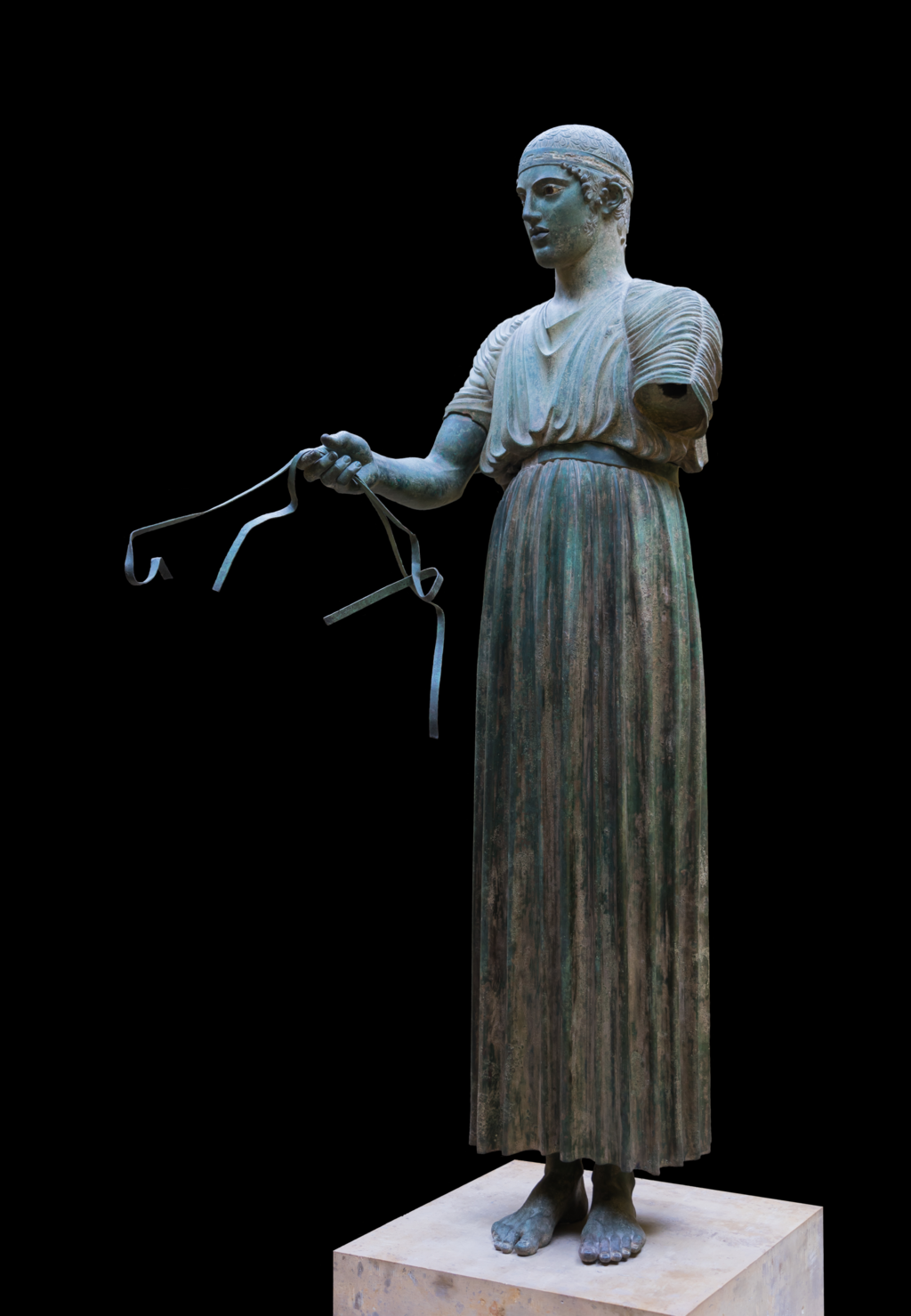
First the pieces of this Delphic charioteer (474 BC) would have been formed in clay, coated with wax, encased in silica mould, the wax melted out and replaced by pouring in molten bronze whose tensile strength allowed his limbs to lift themselves free from the traditional archaic stiff pose beside his body (and the reason many marble statues have lost more arms than him). Ironically the folds of his tunic look almost like a stone column – they would have been cut across by the chariot, but then we might not glimpse his feet, apparently admired in antiquity.
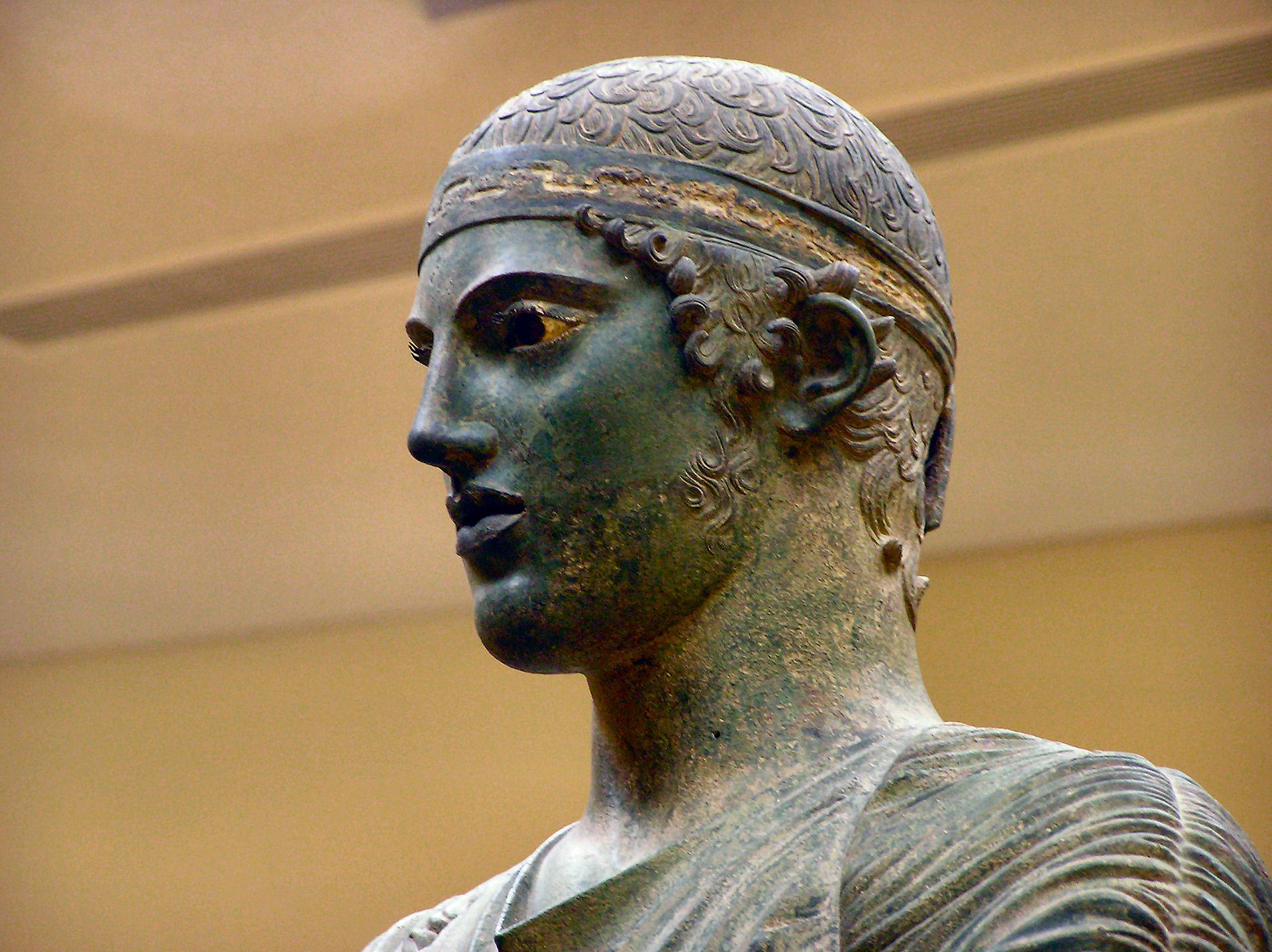
The delicacy of feature possible in his facial decoration, eyelashes intact and glass irises, suggests that the idea of coloured statuary might not be so garish as some have thought. There are plenty of other reasons to make the pilgrimage (Appalachian Spring, anyone?) but this figure is worth a trip to Delphi on his own.

 thebicyclops